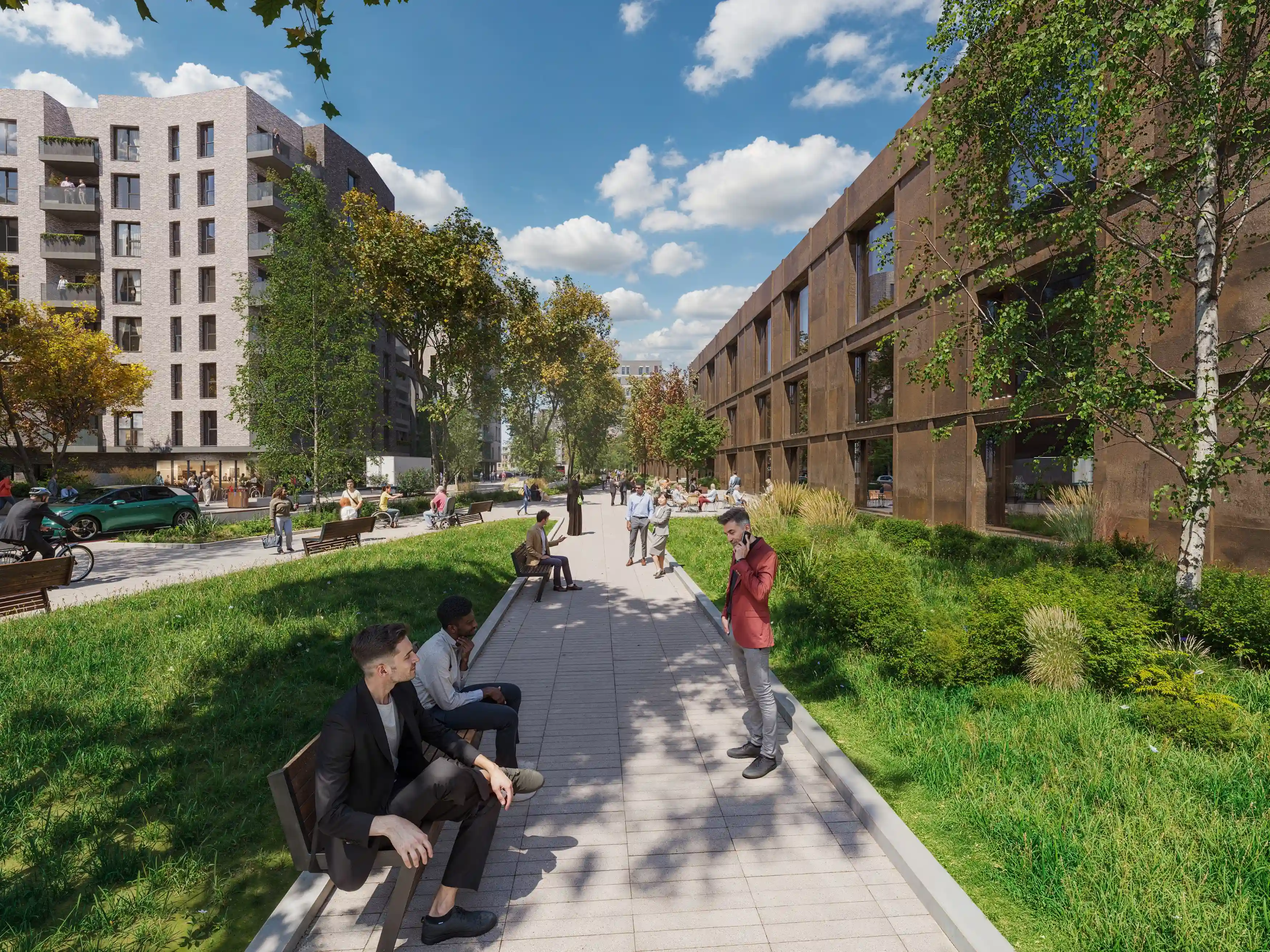
View of the data centre from the consented housing scheme near New Lydenburg Street
Data Centre
Using the most modern technology, the data centre and supporting buildings would be designed to reflect Charlton’s industrial heritage.
Ready to connect to the energy grid, the plans would be net positive for the local area’s power capacity. This is because we are considering opportunities to look at a new, low carbon, district heat network for the surrounding area, harnessing heat output from the data centre.
Unlike some other data centres, Charlton Gateway will use a ‘dry’ cooling system, meaning it would not have an impact on the local water supply. Rather than using continuous running water to cool the data centre, we will instead use a finite amount of water which would be reused.
The data centre would be supported by a new substation to ensure efficient and safe power delivery to the building. Backup generators would also be installed to provide emergency power during grid outages. This is very rare in the UK, meaning they are unlikely to be used regularly.
If approved, we expect to deliver the data centre by 2029. This in turn would unlock wider development opportunities in the area in tandem with the already consented projects in Charlton Riverside, attracting further regeneration and investment in the area.
Our plan is to submit a planning application to Royal Borough of Greenwich in early 2026.
Need: Data centres store digital information. They’re essential to everyday life in the UK, powering emails and websites, supporting retailers and public services, and protecting our national security. The need for data storage and processing has grown in the age of digital innovation driven by computers, the internet, mobile devices, the cloud and artificial intelligence (AI). This is part of the reason why the UK is running short on cloud capacity. This ‘data deficit’ is limiting economic growth by making it harder for businesses to expand and limiting innovation in our public services.
Policy context: In September 2024, Government designated data centres as Critical National Infrastructure (CNI), recognising their importance to the economy and safety of UK data. 2024 revisions to the National Planning Policy Framework (NPPF) require that local authorities must now consider the need for data centres and their specific locational requirements in planning decisions.
Design and heritage
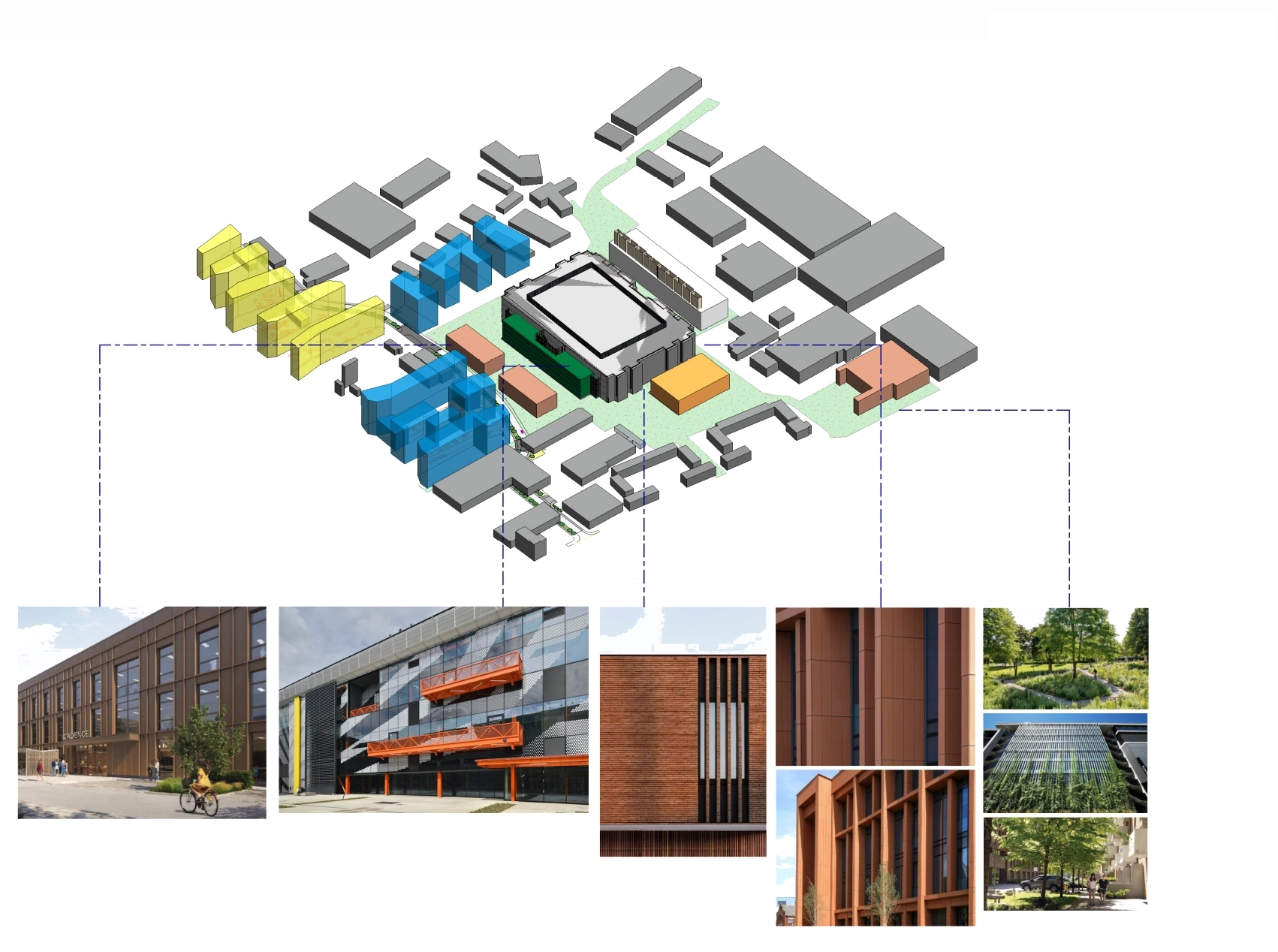
The buildings proposed on site have been designed to complement and respect existing and future development while staying true to Charlton’s past industries
This includes:
- The data centre would be around 100 metres away from the closest existing residential buildings on Derrick and Atlas Gardens, separated by new green space.
- The data centre would be designed as a mix of red brick, terracotta and metal finishes, matching the industrial character of the area. The building would be designed to blend with surrounding existing and future developments.
- Supporting buildings, such as the substation and backup generators, would be smaller and sit next to the data centre to limit visual impact on the wider area. They would also be partially covered by new trees and greenery.
- There is an opportunity to provide public art across the site at dedicated spaces on and around the buildings. We would be very grateful if the local community could contribute to ideas for public art, including concepts that reference Charlton’s history and celebrate the identity of the area.
AND BUSINESS SPACE